Capture speech
A microphone or uploaded recording provides the spoken input. The system separates the voice signal from pauses and background sound as far as its processing allows.
Voice AI explained
What is voice-based AI? It is technology that understands spoken language, processes meaning, and produces a useful response through text, audio, or an action. This guide breaks down the idea without technical jargon.
The short answer
Voice-based AI connects human speech with software that can interpret, generate, or act on language. It can support a conversation, but it is more than a microphone attached to a chatbot.
Text to speech turns written words into spoken audio for narration, accessibility, and voice interfaces.
Voice changer AI modifies the character of spoken audio while preserving the timing and content of the original voice.
A voice AI agent combines speech interaction with a task-oriented system that can guide a conversation toward an outcome.
Voice AI examples show how spoken interfaces fit into learning, media production, accessibility, and everyday communication.
Behind the response
A typical voice interaction moves through several connected stages. Each stage handles a different part of turning sound into meaning and meaning back into sound.
A microphone or uploaded recording provides the spoken input. The system separates the voice signal from pauses and background sound as far as its processing allows.
Speech recognition converts sound into words, while language processing considers intent, context, tone, and the relationship between the words in the request.
The system can answer in text, create spoken audio, recommend a next step, or trigger an action supported by the application.
Practical boundaries
Voice AI is useful when speech is the most natural way to provide information or request help. Its limits matter just as much as its capabilities.
A creator drafts narration from a written script, then reviews the generated audio before using it in a video.
Voice AI shortens the distance between an idea and a listenable draft without removing the need for editorial review.
ai voice generatorA team offers spoken versions of written instructions for people who prefer listening or have difficulty reading on screen.
Voice interfaces can make information easier to access, provided the wording, pronunciation, and pacing are checked.
text to speechA learner listens to phrases, repeats them aloud, and compares the result with a reference voice.
Spoken practice adds pronunciation and listening feedback to vocabulary study.
hindi ai voice generator freeA support workflow uses spoken prompts to collect basic information before a human handles a complex request.
Voice AI can organize routine exchanges, but it should not be treated as a guaranteed substitute for judgment, empathy, or escalation.
voice ai agentFrom raw sound to meaning
The same underlying process can serve different people. The difference is usually the desired output: a draft, an accessible format, a practice tool, or a guided interaction.

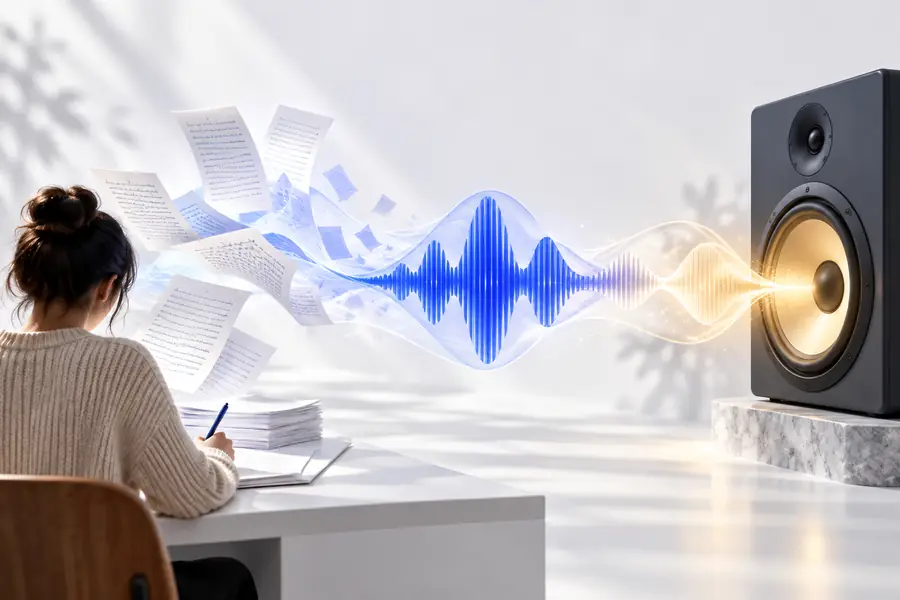
Voice AI adds an interpretation layer between a person speaking and software responding.
Understanding voice AI starts with the flow: speak or provide language, let the system interpret it, then review the result in the form you need. Explore the tools available through Voice Ai and decide where spoken interaction fits your project.
Common question
Voice-based AI is software that works with spoken language as an input, an output, or both. It can recognize speech, interpret the words and intent, generate a response, and sometimes connect that response to an action.
No. Speech recognition focuses on converting spoken sound into written words. Voice AI may use speech recognition as one stage, then add language understanding, response generation, text to speech, or another application action.
Common uses include narration drafts, spoken versions of written content, pronunciation practice, voice-driven support flows, and conversational interfaces. The best use depends on the quality of the input and the level of review required.
No. Performance can vary with accents, noise, overlapping speakers, unclear wording, specialist vocabulary, and context. Important outputs should be checked by a person rather than assumed to be correct.
No. A voice AI system may return text, audio, a structured result, or an action. The output depends on how the specific tool is designed and what the user is trying to accomplish.